
No products in the cart.
360mm ARGB AIO Liquid Cooler: How to Choose the Best Cooling for High-End Gaming PCs
High-end gaming PCs require a cooling solution that can handle demanding processors, intensive workloads, and extended gaming sessions. As CPU performance increases, heat management becomes increasingly important for maintaining stable operation and consistent performance. An all-in-one liquid cooling system combines a pump, radiator, and fans into one integrated unit, making installation more convenient than assembling a custom water-cooling loop. For gamers building powerful desktops, choosing the right 360mm ARGB AIO Liquid Cooler involves evaluating cooling capacity, airflow, noise levels, platform compatibility, and lighting features.
Why Choose a 360mm AIO Liquid Cooler for Gaming PCs?
A 360mm radiator provides a larger heat dissipation area than many smaller liquid cooling options. This allows heat transferred from the CPU to spread across the radiator, where multiple fans help move air through the cooling fins. As a result, a 360 CPU cooler can be a practical choice for high-performance gaming systems and other demanding desktop applications. However, actual cooling performance also depends on the processor’s thermal output, case airflow, fan configuration, and installation quality.
An AIO CPU cooler also offers a more integrated installation process because it comes as a pre-filled cooling system with a pump, radiator, and tubing. Unlike a custom water-cooling loop, users generally do not need to assemble individual cooling components or refill coolant during normal operation. Therefore, it can provide a convenient balance between cooling performance, appearance, and maintenance requirements for gaming PC builders.
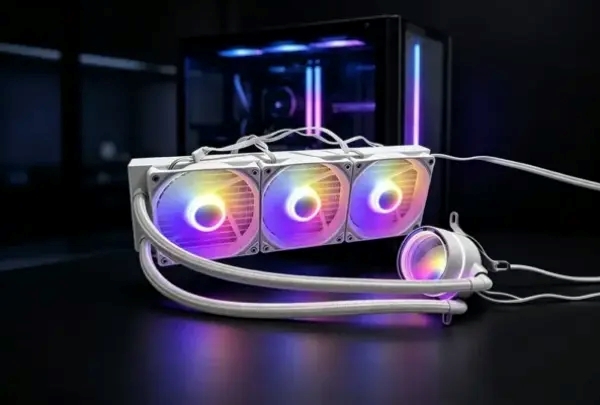
Key Features of the LF02-360-2-ARGB Liquid Cooler
The 360mm ARGB AIO Liquid Cooler LF02-360-2-ARGB is designed for gaming PCs that need efficient heat transfer and customizable lighting. It combines a 360mm aluminum radiator, a copper pump block, and three 120mm PWM ARGB fans to create an integrated cooling solution. In addition, its sealed, pre-filled liquid loop reduces routine maintenance requirements, while the ARGB lighting adds visual customization to gaming builds.
The following table summarizes the main product specifications.
| Specification | Product Details |
|---|---|
| Model | LF02-360-2-ARGB |
| Radiator Size | 397 × 120 × 27mm |
| Radiator Material | Aluminum |
| Radiator Color | Black or White |
| Radiator and Fan Size | 397 × 120 × 52mm |
| Fan Quantity | 3 × 120mm |
| Fan Dimensions | 120 × 120 × 25mm |
| Fan Speed | 800–2000 RPM |
| Airflow | 50 CFM |
| Noise Level | 11–27 dBA |
| Fan Bearing | Hydraulic |
| Fan Life | 40,000 hours |
| Motor Life | 70,000 hours |
| Pump Block Material | Copper |
| Pump Block Dimensions | 85.5 × 72.6 × 45mm |
| Fan Voltage | 12V DC |
| Fan Current | 0.36A |
| Pump Current | 0.3A |
| Lighting and Control | ARGB and PWM, 4-pin |
| Total Weight | 2.4kg |
| CPU Compatibility | AMD All; Intel LGA 1150/1151/1155/1156/1366/1700/2011/2066 |
Three Important Components That Affect Cooling Performance
A liquid cooling system relies on several components working together. Therefore, buyers should evaluate the radiator, pump block, and fans as a complete cooling solution rather than focusing on radiator size alone.
1. 360mm Aluminum Radiator
The aluminum radiator provides a large surface area for heat dissipation. Its stacked fins increase the contact area between the cooling system and surrounding airflow, helping transfer heat away from the circulating coolant. Moreover, the radiator supports different installation preferences with black and white color options. For OEM projects, anodized, polished, or brushed surface treatments can also be discussed according to customization requirements.
2. Copper Pump Block
The copper pump block helps transfer heat away from the CPU surface and into the liquid cooling loop. Its flat contact surface is designed to maintain close contact with the processor, supporting efficient heat transfer. Meanwhile, the built-in pump motor circulates coolant through the sealed loop, while low-vibration operation helps support a more comfortable desktop environment.
3. Triple 120mm PWM ARGB Fans
The three 120mm fans provide airflow through the radiator to support heat dissipation. With PWM control, fan speed can respond to CPU temperature and workload, allowing lower speeds during lighter tasks and increased airflow when cooling demand rises. Additionally, the addressable RGB lighting provides visual customization for gaming PC builds.
How to Choose the Right Cooling Solution for a High-End Gaming PC
Selecting a gaming CPU cooler requires more than comparing product specifications. Buyers should first consider their processor, PC case dimensions, motherboard platform, and expected workload. The following factors can help narrow down suitable cooling options.
- Check CPU cooling requirements: Match the cooler’s verified thermal capacity with the processor’s actual power and heat output. Do not rely on radiator size alone when evaluating cooling performance.
- Confirm case compatibility: Check whether the PC case supports a 360mm radiator and has enough clearance for the radiator, fans, and tubing.
- Verify CPU socket support: Confirm that the mounting kit matches the motherboard socket before installation.
- Evaluate airflow and noise: Review fan speed, airflow, and noise specifications together to understand how the cooler may perform under different workloads.
- Consider lighting compatibility: Check whether the ARGB connector and motherboard software support the lighting synchronization features required for the build.
- Review maintenance requirements: A sealed, pre-filled loop can simplify ownership because users do not need to add coolant during normal operation.
ARGB Lighting and Display Features for Gaming Builds
Cooling performance is important, but visual customization also influences component selection for gaming PCs. Addressable ARGB fans allow users to adjust lighting effects and coordinate the cooler with other illuminated components. The LF02-360-2-ARGB supports synchronization with compatible ASUS, MSI, and Gigabyte motherboard lighting software, allowing builders to create coordinated lighting profiles.
Some gaming cooling products also offer a liquid cooler display, such as an LCD or OLED screen, to show system information or personalized visuals. However, display functionality depends on the specific product configuration. Buyers interested in LCD or OLED options should confirm availability, display size, software support, and customization details before ordering.
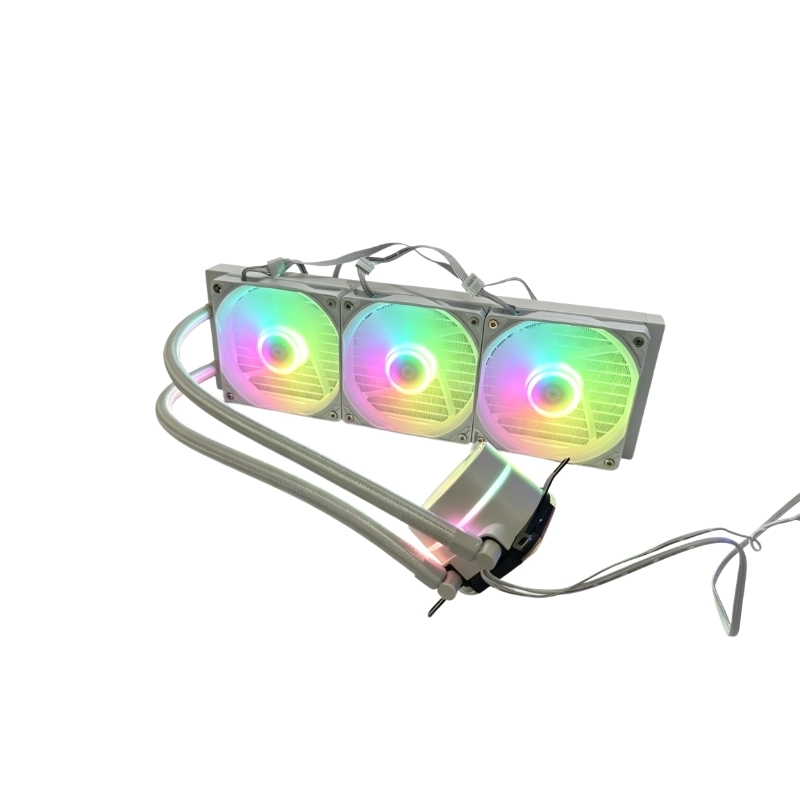
Working with a CPU Cooler Manufacturer for OEM Projects
For gaming PC brands, distributors, and system integrators, working with an experienced CPU cooler manufacturer can help align cooling products with different market requirements. Important considerations include radiator color, ARGB lighting, fan specifications, mounting compatibility, and product appearance. In addition, OEM buyers should confirm packaging, branding options, and sample evaluation requirements before moving into bulk purchasing.
Yanghai offers cooling product options for customers developing gaming PC and desktop hardware solutions. For the LF02-360-2-ARGB, buyers can discuss product configurations and potential OEM requirements based on their target market. Providing the intended CPU platform, PC case dimensions, and preferred lighting configuration can make product evaluation and customization more efficient.
Conclusion
Choosing a liquid cooling solution for a high-end gaming PC requires a balance between heat dissipation, airflow, noise, compatibility, and appearance. The 360mm ARGB AIO Liquid Cooler LF02-360-2-ARGB combines a large aluminum radiator, copper pump block, triple 120mm PWM ARGB fans, and a sealed pre-filled loop. Its platform compatibility and customizable lighting make it a candidate for gaming PC builds that support 360mm radiator installations. Before purchasing, users should verify case clearance, CPU socket compatibility, and the cooler’s confirmed thermal capacity to ensure the configuration meets their system requirements.

Add comment